 By Vistech Europe
Expanding your home is often easier than moving. But before you start thinking about walls and roofs, you first need to address the issue of foundations. For small residential additions, screw piles are gaining ground over traditional methods such as concrete or sonotubes.
This guide is intended for self-builders and homeowners who want to understand how screw piles work and compare them to other metal foundation options. You’ll find selection criteria based on your soil type, practical benefits on the job site, and limitations to be aware of before you begin.
Key Points: How to Choose Screw Piles for an Addition
- Screw piles can be installed in just a few hours, without concrete or excavation, which reduces construction time and labor costs.
- They are suitable for most soil types (clay, sand, sloping terrain) and can be adapted to tight spaces near an existing foundation.
- Pieux Vistech offers galvanized piles with a documented lifespan of at least 75 years and a lifetime warranty on installation.
- The choice of diameter and depth depends on the weight of your addition and the soil’s bearing capacity, which is verified by torque measurements during installation.
- A certified installer assesses your property and selects the piles best suited to your project before beginning work.
What is a screw pile, and how does it work?
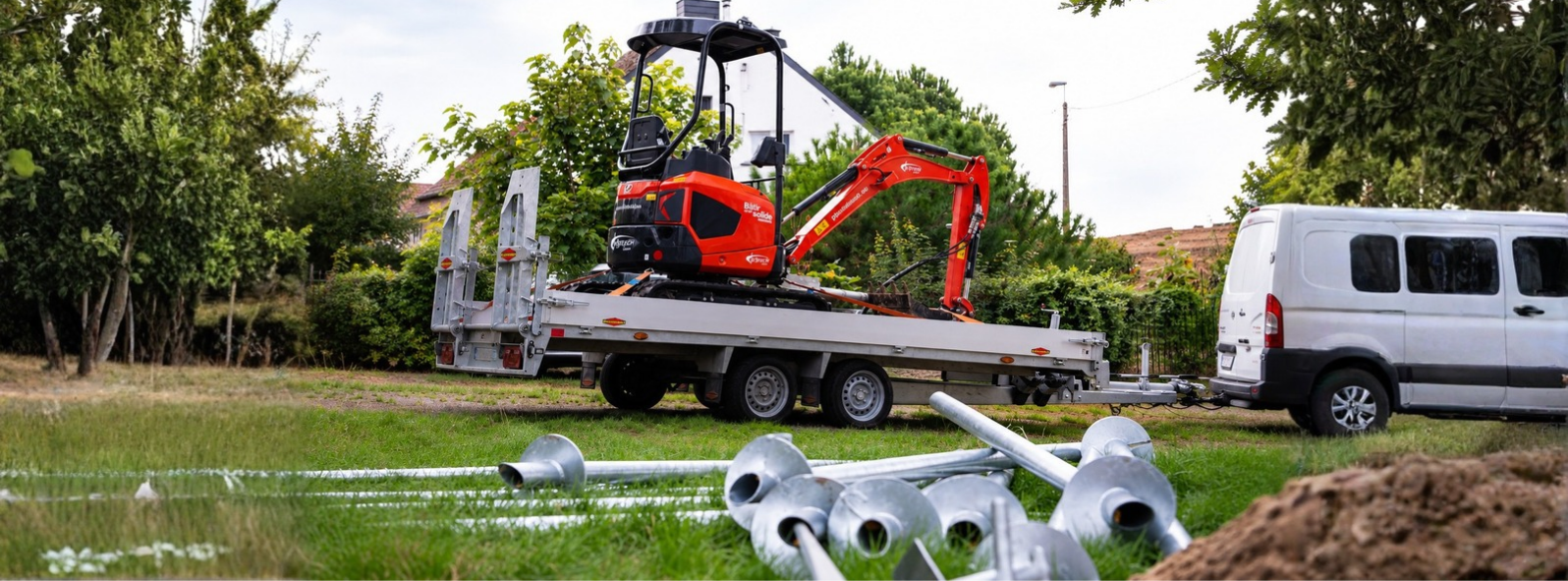
A screw pile is a galvanized steel rod with a helical tip. It is mechanically screwed into the ground using compact hydraulic equipment until it reaches a stable soil layer below the frost line.
Unlike concrete foundations, screw piles require no excavation or curing time. Once the pile is in place, you can begin construction on it the very same day. This speed of installation makes them a particularly attractive option for self-build projects.
The steel’s hot-dip galvanization protects the pile from corrosion. Reputable manufacturers guarantee a service life of at least 75 years, even under the harshest climatic conditions.
Why are screw piles suitable for small additions?
An addition connects directly to the existing structure. It is precisely at this junction that the risk of movement is greatest. If the foundation shifts even a few millimeters during freeze-thaw cycles, cracks will appear in the drywall and doors will start to jam.
Screw piles are anchored below the frost line, where the ground never freezes. They therefore remain stable year-round. This stability protects the connection between your addition and the main building.
The equipmentused to install the piles is compact. It can operate in tight spaces along an existing foundation wall without damaging your landscaping or fence.
What types of metal foundations are available for an addition?
In addition to screw piles, several other metal foundation solutions are available on the market. Each has its own specific features depending on the nature of your project.
Helical screw piles
These are the most common choice for residential projects. Their helical design allows them to anchor securely in the ground while disturbing as little soil as possible. They can withstand compressive, tensile, and lateral loads.
Drilled micropiles
These small-diameter piles are drilled and then filled with cement grout. They are suitable for rocky soils or foundation underpinning projects, but require more time and equipment than screw piles.
Lightweight foundation screws
Sold at hardware stores for patios and garden sheds, these screws are not suitable for structural additions. Their load-bearing capacity is too low to support the weight of a living space.
How to choose between screw piles and concrete foundations?
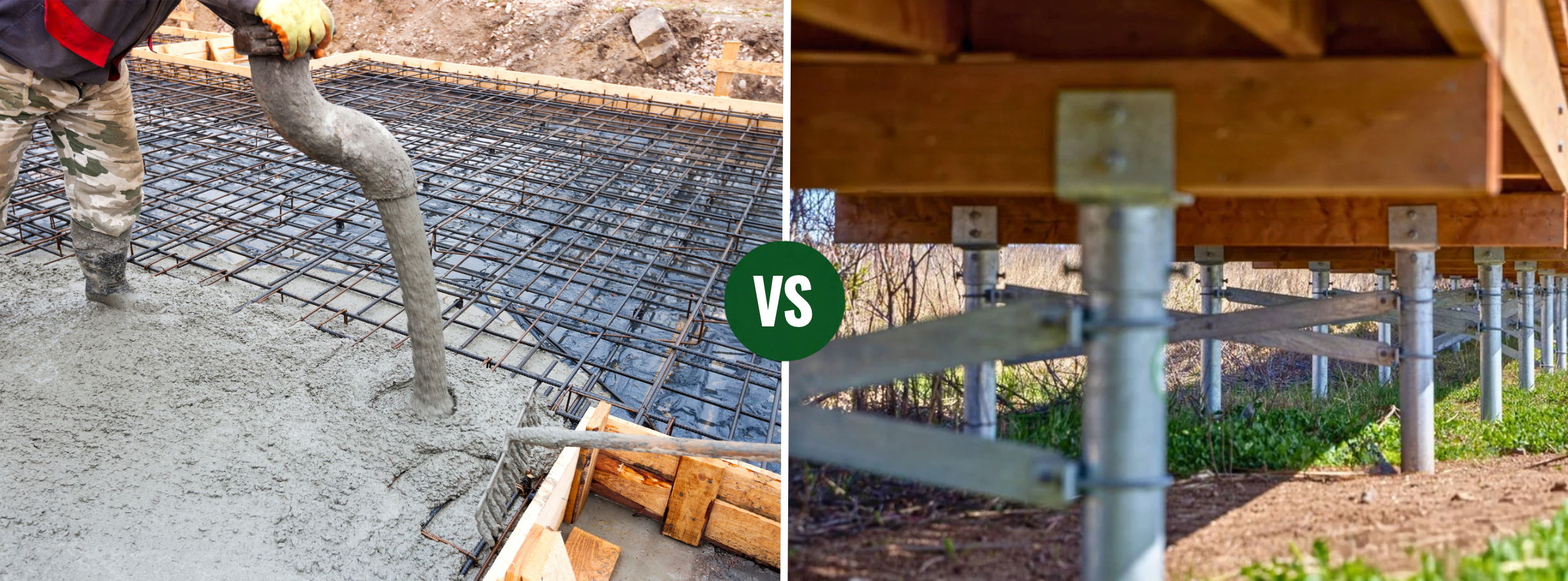
Concrete remains the traditional choice for residential foundations. But for an addition, it has several practical drawbacks that screw piles help avoid.
Installation Time
A screw pile foundation can be installed in a single day. Concrete requires 2 to 5 days of work, plus a curing time of 24 to 72 hours before it can bear a load.
Impact on the Property
Concrete requires excavation and often involves a concrete mixer truck. Your yard ends up in disarray. Screw piles penetrate the ground by rotating, without digging. Your lawn remains intact.
Frost Resistance
A concrete footing poured above the frost line may lift due to freeze-thaw cycles. Screw piles are anchored deep in the ground, in a zone that never freezes.
For a detailed comparison between screw piles and concrete, consider the total cost of the project, including excavation and site restoration.
What criteria determine the choice of pile?
Every expansion project is different. The right pile depends on several factors that your installer will assess before beginning work.
Soil type
Screw piles work well in clay, sand, silt, and most organic soils. Rocky or very compacted soil may require a preliminary assessment and, in some cases, custom-sized piles.
The load to be supported
A one-story addition does not require the same anchoring as a two-story addition. The pile diameter and spacing between piles are calculated based on the total weight of the structure.
The frost-free depth
This varies by region. In most temperate areas of Europe, piles are installed between 1.2 m and 2 m below ground level. Your installer is familiar with local requirements.
Site Accessibility
If your backyard is narrow or access is limited by a fence, screw piles are often the only viable option. The installation equipment is compact and easy to maneuver.
How does the installation of posts for an addition work?
Installation follows a well-established process, from the initial contact with the installer through to the completion of the project. Here are the main steps.
Step 1: Project Planning
First and foremost, you must check your municipality’s regulations regarding additions. An expansion plan drawn up by an architect or a building technologist is often required. For large structures, a structural engineer must approve the project.
Step 2: Site Assessment
The installer analyzes the soil conditions and the construction plan. They determine the appropriate type of piles, their number, and their exact placement. Pieux Vistech evaluates most projects in less than 48 hours.
Step 3: Pile Installation
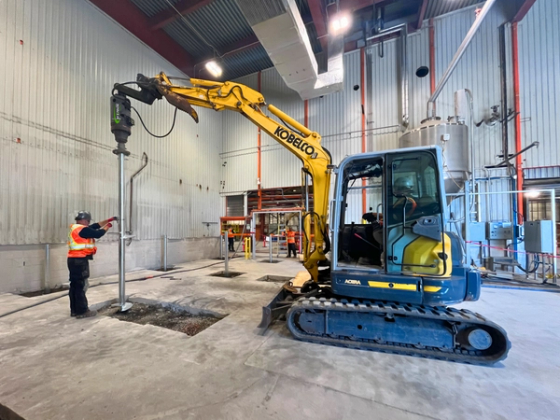
On the day of installation, the team arrives with compact equipment. Each pile is mechanically screwed into the ground until it reaches the calculated bearing depth. Bearing capacity is measured in real time based on the screw-in torque. The entire installation typically takes 3 to 5 hours for a standard extension.
Step 4: Start of Construction Work
Unlike concrete, there is no drying time to wait for. Your contractor can begin erecting the extension’s frame as early as the next morning.
What are the benefits of screw piles for a do-it-yourself project?
For homeowners who build their own extension or coordinate the work, screw piles offer tangible benefits in everyday life.
Easy Coordination
You have just one point of contact for the foundation. No need to coordinate an excavation crew, a concrete truck, and formwork. The installer handles everything in a single day.
Clean Construction Site
With no excavation or concrete, your property stays clean from start to finish. No dirt to haul away, no site restoration needed. Your neighbors will thank you.
Flexible scheduling
Screw piles can be installed in any season, including winter. Concrete, on the other hand, requires warmth to set properly. If you want to start yourexpansion project in early spring, this flexibility makes a real difference.
Controlled Costs
The quote for a screw pile foundation includes everything: the assessment, the piles, the installation, and the documentation. No surprises during construction.
What are the limitations of screw piles you should be aware of?
Like any construction technique, screw piles have their limitations. Understanding them allows you to make an informed choice.
Rocky Soil
If bedrock is close to the surface, installation may be more complex. The installer will assess this risk during the preliminary site visit and propose a suitable solution if necessary.
Very Heavy Structures
For large-scale additions or multi-story buildings, concrete may still be required by local building codes. Screw piles are ideal for one- or two-story residential additions.
Professional Installation
Contrary to what some online retailers may suggest, screw piles for foundations are not a do-it-yourself project. Specialized equipment is required, and verifying the load-bearing capacity demands technical expertise.
How to Check the Quality of a Screw Pile?
Not all screw piles are created equal. Before choosing a supplier, check a few essential factors.
Galvanization
A high-quality pile is hot-dip galvanized, not simply painted or zinc-coated. Hot-dip galvanization ensures long-lasting protection against corrosion. Pieux Vistech’s galvanized piles have a documented lifespan of at least 75 years.
Certifications
Look for piles certified to local building codes. Independent certifications (such as the CCMC in Canada or the ICC-ES in the United States) guarantee that the piles meet building code requirements.
The warranty
A lifetime warranty on the installation demonstrates the manufacturer’s confidence in its product. Make sure it is a written document, not just a verbal promise.
Installer Training
Certified installers have undergone specialized training. They know how to identify soil types, select the right piles, and verify load-bearing capacity during installation.
How many piles are needed for an addition?
The number of piles depends on the size and weight of your addition. Here are some general guidelines.
For a small addition, such as a sunroom or home office, expect between 4 and 8 piles. A side addition for a living space typically requires 6 to 12 piles. A two-story addition may require more anchor points.
Your installer will calculate the exact number of piles based on the structural loads of your project. The estimate details this calculation so you can understand precisely what is planned.
What is the site assessment process?
Before providing you with a quote, the installer will assess the conditions of your site. This step is free and non-binding with most reputable installers.
The assessment covers several points: the nature of the soil visible at the surface, indications of a nearby water table, the slope of the land, accessibility for installation equipment, and the proximity to the existing foundation.
In some cases, a formal soil study may be recommended. It provides precise information on the bearing capacity at various depths.
How is the load-bearing capacity verified during installation?
This is one of the distinctive advantages of screw piles over concrete. Bearing capacity is not merely calculated on paper—it is measured in real time during installation.
The hydraulic equipment that screws the pile into the ground measures the resistance torque. The denser the soil, the greater the resistance. When the machine reaches the target value, the installer knows that the pile is anchored in a layer solid enough to support your structure.
This measurement is documented for each pile. This gives you proof that your foundation has been validated on-site, not just on paper.
What happens if the soil is harder than expected?
Sometimes the soil reveals surprises during installation: an unexpected layer of rock, a particularly soft area, or the presence of old foundations.
An experienced installer knows how to adapt their approach. They may choose a pile with a different diameter, adjust the installation angle, or slightly reposition an anchor point. These adjustments are part of the job.
In truly complex cases, the installer may recommend a supplementary geotechnical study before proceeding. It’s better to take the time to do it right than to run into problems later.
How do you maintain a foundation built on screw piles?
This is one of the major advantages of screw piles: they require no maintenance once installed.
Galvanized steel resists corrosion for decades. The pile is completely buried, protected from impact and the elements. There’s nothing to repaint, nothing to treat, and nothing to check periodically.
Concrete foundations, on the other hand, can crack over time and require repairs. Screw piles eliminate this long-term maintenance concern.
Are screw piles an eco-friendly solution?
Compared to traditional foundations, screw piles have a significantly lower environmental impact.
They do not require concrete, the production of which generates significant CO2 emissions. There is no excavation either, so no soil needs to be hauled away by truck and no backfill needs to be brought in.
At the end of their service life, the piles can be removed from the ground and recycled. A concrete foundation, on the other hand, remains in place forever or must be demolished at great expense. For homeowners concerned about their impact on the land, this is a compelling argument.
How is Pieux Vistech positioned in the European market?
Pieux Vistech is part of an international network that has been active for over 30 years in the screw pile foundation sector. The company focuses on the quality of its products and the rigorous training of its installers.
Each pile is manufactured according to ISO 9001-certified quality standards. Installers in the network complete an internal certification program before they can begin their first project.
The lifetime warranty offered by Vistech Piles covers the installation against any movement caused by freezing or thawing. It is a written commitment, not just a sales promise.
Conclusion: How to Make the Right Choice for Your Addition
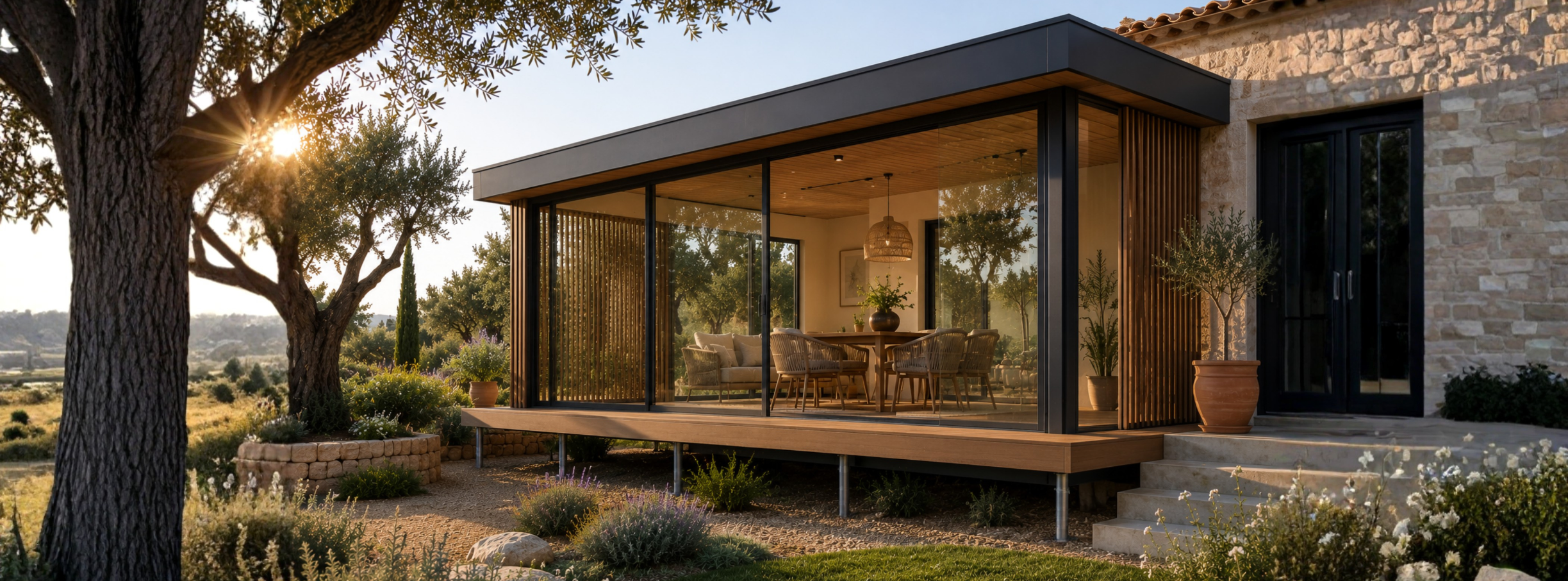
Choosing a foundation for your addition starts with understanding the conditions of your lot and the constraints of your project. Screw piles are suitable for the vast majority of small residential additions, offering tangible advantages in terms of speed, cleanliness, and long-term stability.
Concrete remains a valid option for certain projects, particularly very heavy structures or cases where local codes require it. But for a one- or two-story addition, screw piles are well worth serious consideration.
The best advice is to have your property evaluated by a certified installer. The evaluation is usually free and allows you to compare options with all the facts in hand. Request a no-obligation quote for your project.
Frequently Asked Questions About Screw Piles for Extensions
Can screw piles support a two-story addition?
Yes. Pieux Vistech screw piles are designed to support one- and two-story residential extensions. The diameter and configuration of the piles are selected based on your project’s structural loads, which are calculated by the installer or validated by an engineer if required.
How long does it take to install a foundation for an addition?
A standard addition requires between 6 and 12 piles. Installation takes 3 to 5 hours in most cases. Pieux Vistech allows your contractor to begin framing the same day, with no drying time required.
Do screw piles work in clay soil?
Yes. Screw piles perform well in clay, sand, silt, and most organic soils. Pieux Vistech offers piles suited to a wide variety of soil conditions. Your installer will assess the soil during the preliminary site visit.
What warranty covers Pieux Vistech screw piles?
Pieux Vistech provides a lifetime warranty on its screw piles against any movement caused by freezing or thawing. This warranty also covers load-bearing capacity, provided the installation was performed by a certified installer from the network.
Can screw piles be installed in the winter?
Yes. Unlike concrete, which requires above-freezing temperatures to set properly, screw piles can be installed year-round. Pieux Vistech performs installations even in cold weather, allowing you to start your expansion project at any time.
Do screw piles require maintenance?
No. Once installed, galvanized screw piles require no maintenance. The hot-dip galvanized steel used by Pieux Vistech resists corrosion for at least 75 years, even under the harshest conditions.