 By Vistech Europe
Helical pile foundations for your house extension
Extending your home is a great way to create more living space without having to move. Whether you're planning an additional living area, a home office or a conservatory, every house extension project requires careful consideration of its foundations.
While concrete has traditionally been used for foundations, helical piles offer an alternative with several advantages, including faster installation, easier access to challenging sites and minimal disruption to the surrounding ground.
But are helical piles suitable for every house extension? What factors should you consider, and how does the installation process work?
Here's what you need to know to choose the right foundation solution for your project.
Why are foundations so important for a house extension?
Foundations provide structural stability by transferring the weight and other loads of a building safely into the ground.
When planning a house extension, choosing the right foundations is particularly important. They must be designed to accommodate the weight of the new structure, the ground conditions and any requirements associated with connecting the extension to the existing building.
Several factors need to be considered:
- The weight and structural characteristics of the extension.
- The type of soil and its load-bearing capacity.
- The proximity of existing foundations.
- Potential ground movement.
- Access restrictions on the construction site.
Proper foundation design helps ensure the stability and long-term performance of the extension while taking into account the characteristics of the ground and the existing property.
The choice of foundations should therefore be based on a technical assessment of the project, regardless of the materials or construction method used.
Helical piles: an alternative to concrete foundations
Vistech helical piles are foundation elements made from hot-dip galvanised steel. They are mechanically screwed into the ground using specialist installation equipment. The galvanised coating protects the steel against corrosion and contributes to its long-term durability.
Their design allows structural loads to be transferred to soil layers with sufficient load-bearing capacity.
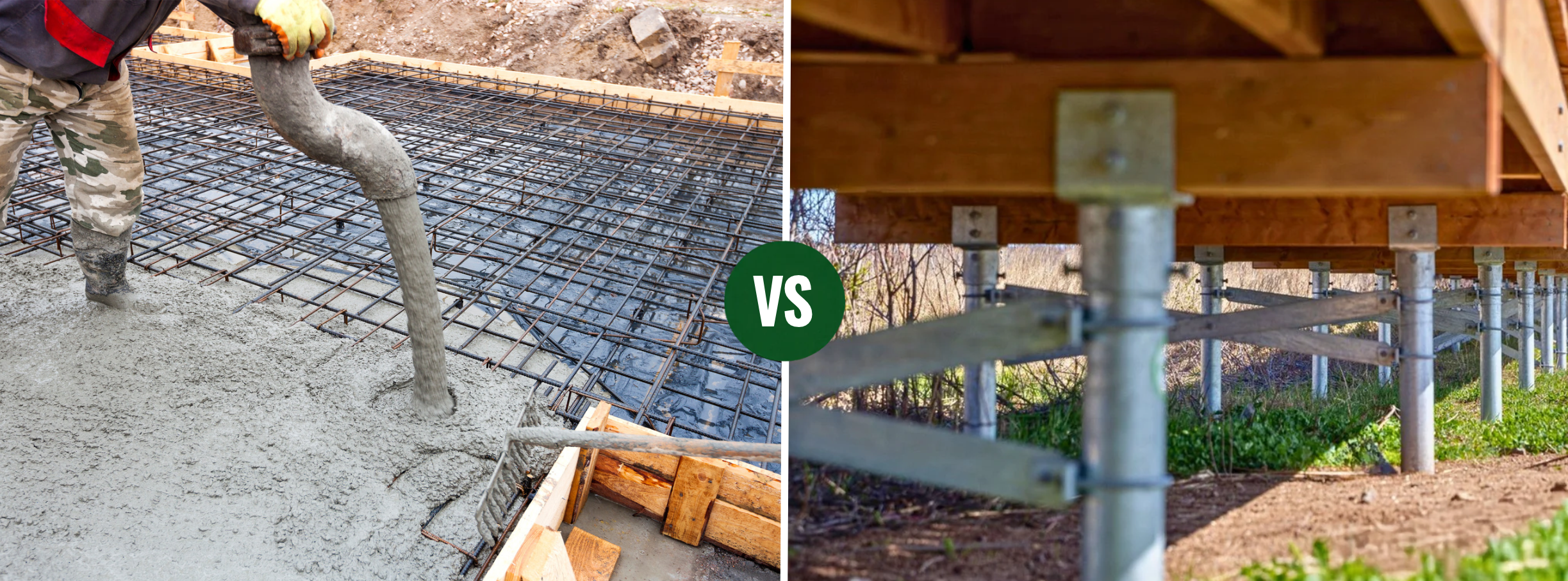
Unlike conventional concrete foundations, helical pile installation does not require excavation for concrete footings or the pouring of concrete.
Once the piles have been installed and their load-bearing capacity has been verified against the project's requirements, construction can continue without waiting for concrete to cure.
This makes helical piles particularly attractive for house extensions where efficient installation and the preservation of existing landscaping are important.
What are the benefits of helical piles for a house extension?
1. Fast installation with no curing time
Installing concrete foundations typically involves several stages, including excavation, ground preparation, possible formwork, concrete pouring and the necessary curing period before construction can continue.
Helical piles simplify this process.
Because they are screwed directly into the ground, there is no concrete setting or curing time to consider.
Depending on the site conditions and project requirements, installation may take just a few hours or a single day, allowing the next stages of construction to begin sooner.
2. No excavation required for pile installation
One of the main advantages of helical piles is the way they are installed.
The piles are screwed directly into the ground without the need to dig trenches or excavate foundation footings.
This approach offers several benefits:
- No excavation required to install the foundations.
- No excavated soil to remove or dispose of as part of the foundation installation.
- Better preservation of gardens, green spaces and existing landscaping.
- Fewer groundworks and less equipment required on site.
These advantages are particularly valuable when building an extension in an established garden.
3. Suitable for sites with restricted access
Building an extension at the rear of a property can present practical challenges, such as narrow side passages, enclosed gardens, nearby fences or existing features that need to be protected.
In these situations, bringing excavation machinery or construction materials onto the site can be difficult.
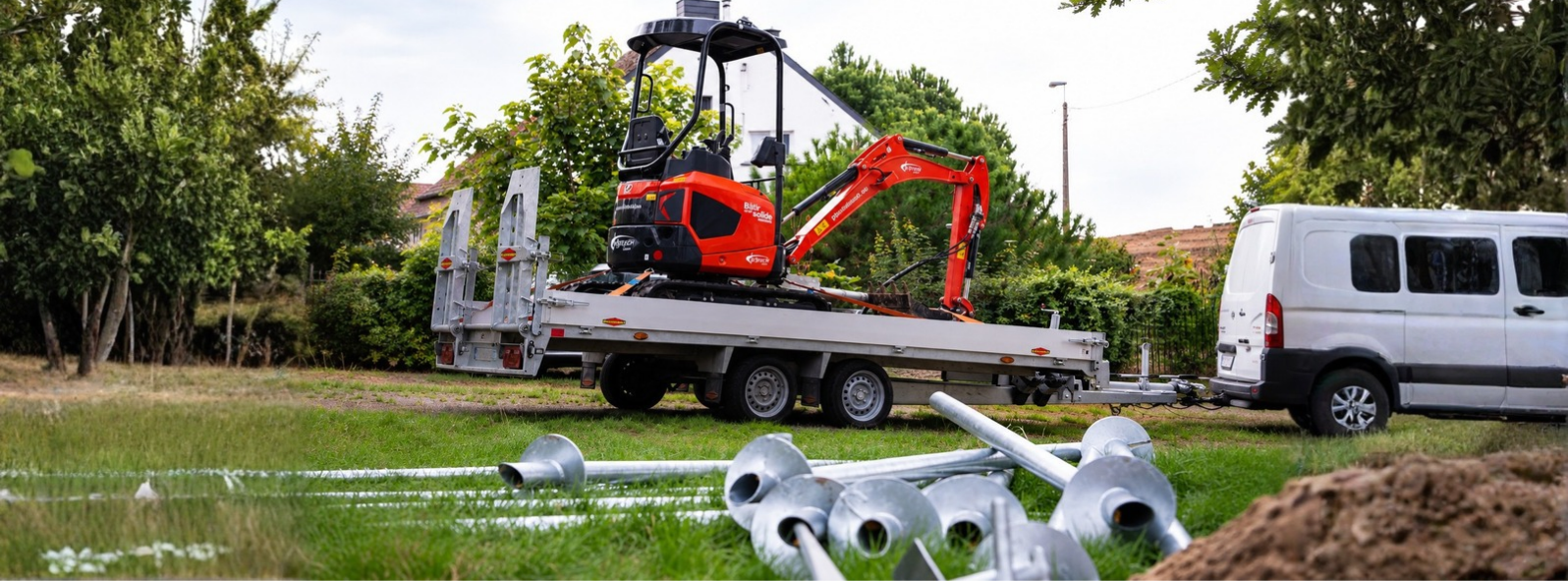
Helical piles can be installed using compact specialist equipment, making them suitable for certain sites with limited access without requiring heavy machinery.
However, site accessibility must always be assessed beforehand to confirm that installation is feasible.
4. A flexible solution for sloping or uneven ground
Not every house extension is built on perfectly level ground.
Where a site slopes or has significant changes in level, traditional foundations may require extensive ground preparation.
Helical piles offer flexibility when adapting foundation designs to different ground conditions.
Depending on the project, pile positioning and structural connections can be designed to support a building across varying ground levels.
This approach can help preserve more of the site's natural topography.
5. Concrete-free and potentially removable foundations
Helical piles allow foundations to be installed without pouring concrete for the relevant foundation elements.
This eliminates the need for cement-based concrete in those foundations and avoids the excavation work normally associated with conventional concrete footings.
Another advantage is that, depending on their condition, configuration and ground conditions, helical piles can potentially be removed by unscrewing them.
This possibility makes them particularly interesting for certain temporary projects or structures that may need to be modified in the future.
What should you consider when choosing helical piles?
Every house extension has its own technical requirements. Choosing the right helical piles involves much more than simply considering the floor area of the new building.
Several factors must be assessed to ensure that the foundations are correctly designed and sized.
Soil type and load-bearing capacity
Ground conditions play a crucial role in foundation design.
Helical piles can be installed in a wide range of soil types. However, their suitability depends on the characteristics of the ground and the loads they need to support.
Rock, buried obstructions or particular geotechnical conditions may require adjustments to the proposed foundation solution.
A preliminary ground assessment helps establish whether helical piles are suitable and determine the most appropriate foundation design.
Structural loads of the extension
Every extension has different structural requirements depending on its design, construction materials and intended use.
Foundation design must take several types of load into account:
- The weight of the structure itself.
- Loads associated with the building's use.
- Environmental loads, particularly wind and snow.
- Potential lateral forces and uplift loads.
Assessing these factors helps determine the number, dimensions and positioning of the helical piles required.
There is no standard number of helical piles for a house extension. Each project requires its own foundation design and load calculations.
Installation depth
The required installation depth of helical piles varies from one project to another. It depends primarily on the soil conditions and the loads that the foundations must support.
The piles are screwed into the ground to an appropriate embedment depth to provide the necessary structural stability.
Depending on the location, local frost depth requirements must also be considered.
A preliminary ground assessment helps determine the appropriate installation depth.
Proximity to the existing building
When an extension is built close to an existing property, the foundations already in place must be taken into account.
Depending on the design, the new extension may have independent foundations or be structurally connected to the existing building.
A technical assessment is needed to determine the most suitable approach and ensure the stability of both structures.
How are helical piles installed for a house extension?
Helical pile installation involves several stages, from the initial project assessment through to preparing the foundations for the new structure.
Step 1: Project and ground assessment
Before installation begins, the relevant technical information must be gathered, including construction drawings, dimensions, structural loads and ground conditions.
Any required planning permissions, technical assessments or structural calculations must also be checked in accordance with local regulations.
This information helps establish whether helical piles are an appropriate foundation solution.
Step 2: Foundation design and pile positioning
Correct foundation design is essential to ensure the stability of the proposed extension.
Based on the structural loads and ground conditions, the required number of helical piles, their dimensions, embedment depth and positions are determined.
Any necessary connections between the piles and the structure are also considered to ensure that loads are distributed appropriately.
Step 3: Installing the helical piles
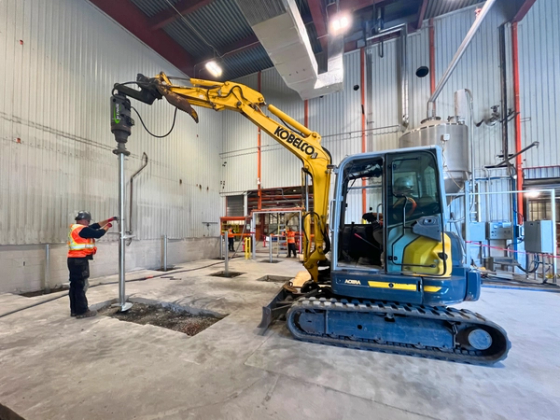
The piles are positioned at the designated locations and mechanically screwed into the ground using suitable installation equipment.
During installation, particular attention is paid to the installation torque.
This important measurement provides an indication of the resistance encountered in the ground and can be used, together with appropriate calculation methods, to estimate the load-bearing capacity of each pile.
Monitoring these parameters helps verify that the installed piles meet the project's technical requirements and can provide the necessary support for the structure.
Step 4: Preparing for the structure
Once the helical piles have been installed and the necessary checks completed, the required structural connections can be fitted.
Construction of the extension can then proceed on the prepared foundations, in accordance with the approved drawings and technical specifications.
Because no concrete is poured for the pile foundations, there is no concrete curing period delaying the next stage of work.
Helical piles vs concrete foundations: which is better for a house extension?
Both foundation methods can be suitable for house extensions, but they differ in several important ways.
| Criteria | Helical piles | Concrete foundations |
|---|---|---|
| Installation | Mechanically screwed into the ground | Excavation and concrete pouring |
| Foundation excavation | None required for pile installation | Generally required |
| Curing time | None | Concrete setting and curing time required |
| Site access | Suitable for certain restricted-access sites | Access required for equipment and materials |
| Ground conditions | Suitability depends on soil characteristics and foundation design | Suitability depends on foundation design and ground conditions |
| Removal | Possible under certain conditions | Usually requires demolition |
Beyond installation speed, the most appropriate foundation solution depends on several factors, including soil conditions, structural loads, site restrictions and the overall cost of the project.
Why use a professional for your house extension foundations?
Designing and installing foundations requires technical expertise tailored to the specific requirements of each project.
Working with qualified professionals helps ensure that the proposed solution is technically feasible and appropriate for the structure and site conditions.
The Vistech network draws on its expertise in helical pile foundations to support a wide range of construction projects, including building extensions.
As every project presents different challenges, a preliminary technical assessment remains essential to identify the most suitable foundation solution.
Conclusion: are helical piles the right choice for your house extension?
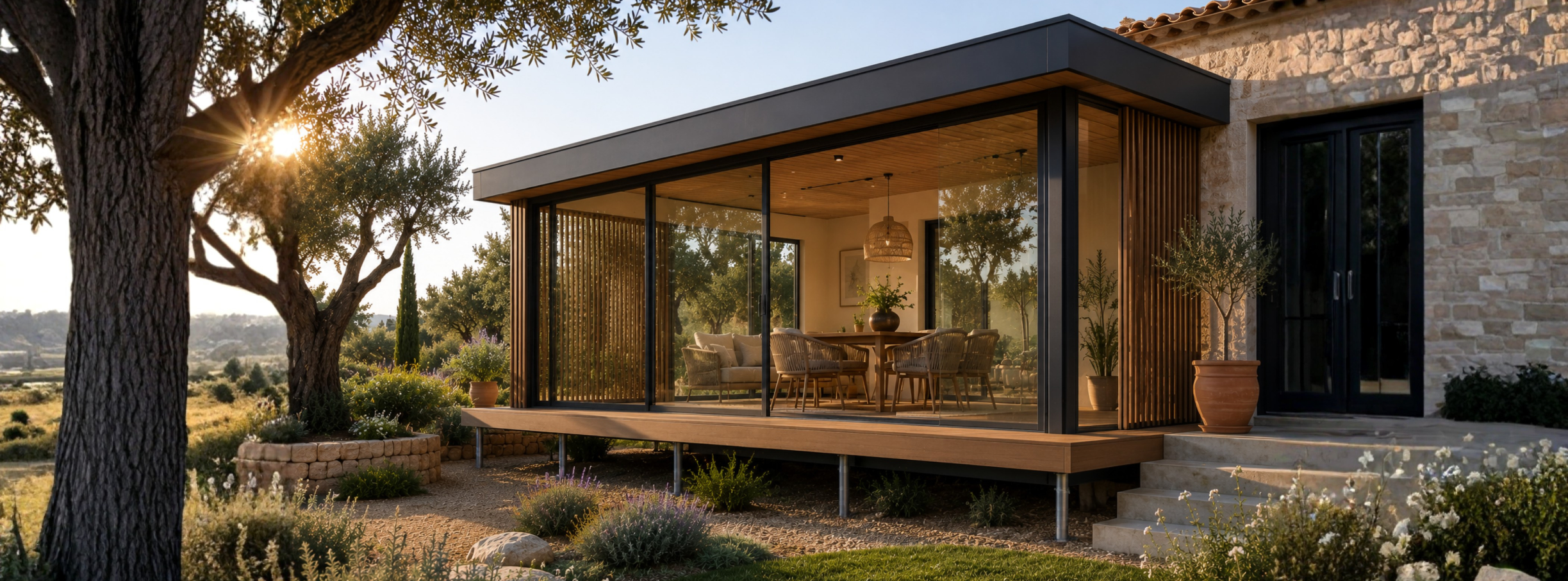
Helical piles offer an attractive alternative to traditional concrete foundations for many house extension projects.
Their fast installation, without concrete pouring or foundation excavation, can simplify construction work while helping preserve the surrounding ground.
They are particularly useful on sites with restricted access and can accommodate a range of ground configurations, provided that a suitable technical assessment is carried out beforehand.
Planning a house extension and wondering whether helical piles are suitable for your project?
Contact the Vistech network to discuss your requirements and request a quote tailored to your project.
FAQ: helical pile foundations for house extensions
Can you build a house extension on helical piles?
Yes. Helical piles can be used to support certain types of house extensions, provided that the foundation design is suitable for the structural loads and ground conditions.
A preliminary technical assessment is necessary to confirm whether they are appropriate for the project.
How many helical piles are needed for a house extension?
The number of helical piles required depends on several factors, including the dimensions of the extension, the weight of the structure, load distribution and the load-bearing capacity of the ground.
The number cannot be determined from the floor area alone. Project-specific foundation calculations are required.
Are helical piles suitable for timber-frame extensions?
Yes. Helical piles can be particularly well suited to timber-frame house extensions.
Their fast installation and the absence of concrete curing time allow the foundations to be prepared efficiently before the timber structure is assembled.
However, the foundation design must still be verified against the structural loads and ground conditions.
Can helical piles be installed near existing foundations?
Yes, in certain circumstances.
Installing helical piles close to an existing building requires careful consideration of the foundations already in place, available working space and any underground utilities.
A technical assessment helps determine whether installation is feasible and what precautions may be necessary.
Are helical piles cheaper than concrete foundations?
Helical piles can be a cost-effective solution for many construction projects.
Their fast installation, without foundation excavation or concrete pouring, can eliminate several expenses associated with ground preparation, soil removal and labour.
However, the final cost depends on the characteristics of the project and the site conditions.
Comparing the total installed cost of each foundation solution is therefore the best way to assess which option offers better value.
How long do helical piles last?
Vistech helical piles are protected by hot-dip galvanising, a process in which the steel is coated with a layer of zinc to protect it against corrosion.
This protective coating contributes to their service life and the long-term durability of the foundations, particularly in environments where the steel is exposed to moisture in the ground.
Can helical piles be installed on sloping ground?
Yes. Helical piles can be used on certain sloping sites.
Their positioning and structural connections must be designed to accommodate the topography, structural loads and overall ground stability.
A preliminary technical assessment is required to confirm whether this foundation method is suitable.
Want to find out whether helical piles are suitable for your house extension? Contact the Vistech network to discuss your project and request a personalised quote.