
 By Vistech Europe
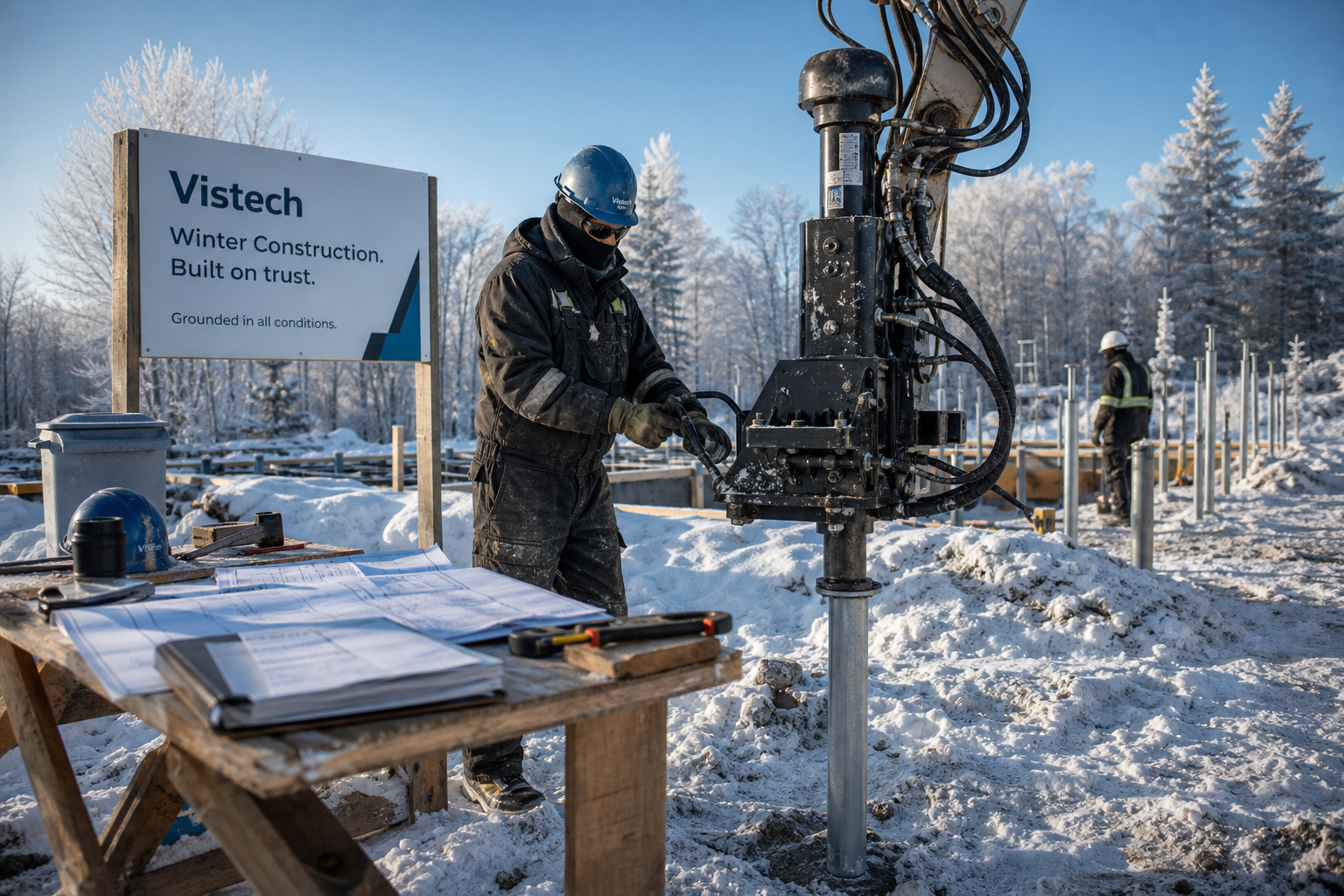
Frozen ground changes how a site behaves, but it does not rule out foundation work altogether. With screw piles, what changes are the methods and the checks to be carried out.
Why frost is a problem for conventional foundations
Water in the soil expands as it freezes. In frost-susceptible ground, this causes heave that acts on any buried element sitting above the frost depth.
Frost depth: the key concept
This is the depth below which the ground is no longer affected by the freeze-thaw cycle. It varies with the region and the type of soil. Every foundation must bear below this limit.
A local figure, not a single value
This depth is set by national technical standards and can differ considerably from one European country to another. It should always be checked against the documents that apply where the site is located.
What this means for screw piles and ground screws in practice
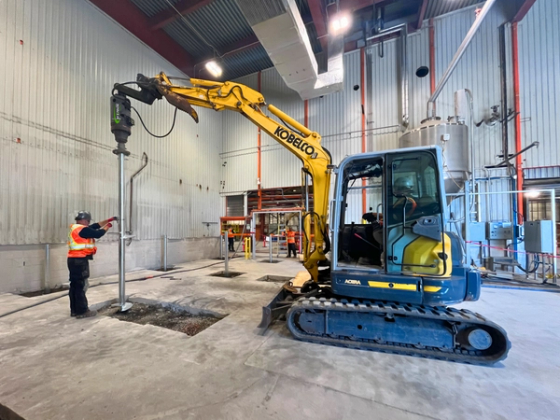
A screwed system installed below the frost depth is not lifted by frost heave. Monitoring the installation torque confirms the anchorage even when the surface layer is frozen.
Any winter site planning must take ground access constraints into account, as these are often more decisive than the temperature itself.
Plan ahead rather than react